

Skin reactions from cheap alloy jewellery — red earlobes, green fingers, itchy wrists — are the reason "hypoallergenic jewelry" gets searched roughly 1,300 times a month in India. This guide ranks the five hypoallergenic jewelry brands worth buying in 2026, comparing gold-plated anti-tarnish pieces against solid silver and fine gold so you know which one actually fits your skin and your wardrobe.
- Mehrooh's gold-plated anti-tarnish jewelry is the best overall pick for hypoallergenic jewelry under everyday budgets in 2026.
- Giva wins for solid sterling silver hypoallergenic jewelry; BlueStone wins for fine gold and diamond pieces.
- Nickel, not gold, causes most jewelry allergies — hypoallergenic jewelry keeps it out of the base metal, not just the plating.
- Melorra suits lightweight daily-wear 18k gold; Zavya suits shoppers who want BIS-hallmarked silver.
- Search demand for hypoallergenic jewelry in India runs at 1,300 monthly searches, and most complaints trace back to nickel-heavy alloy.
Why this matters
Skin reactions from jewelry almost always come down to one metal: nickel. It's cheap, it shows up in alloy blends everywhere, and it's the reason a bargain-bin stud can leave your earlobe red and itchy by lunchtime.
Mehrooh's anti-tarnish jewelry addresses this by keeping nickel out of the base metal and sealing it under a plating layer, instead of just slapping a "gold-plated" label on a piece and hoping for the best. Not every brand does this the same way, which is exactly why this comparison exists.
This list ranks five hypoallergenic jewelry brands sold in India in 2026 on what metal they use, how they finish it, and whether the finish actually holds up past the first month of wear.
What makes the best hypoallergenic jewelry
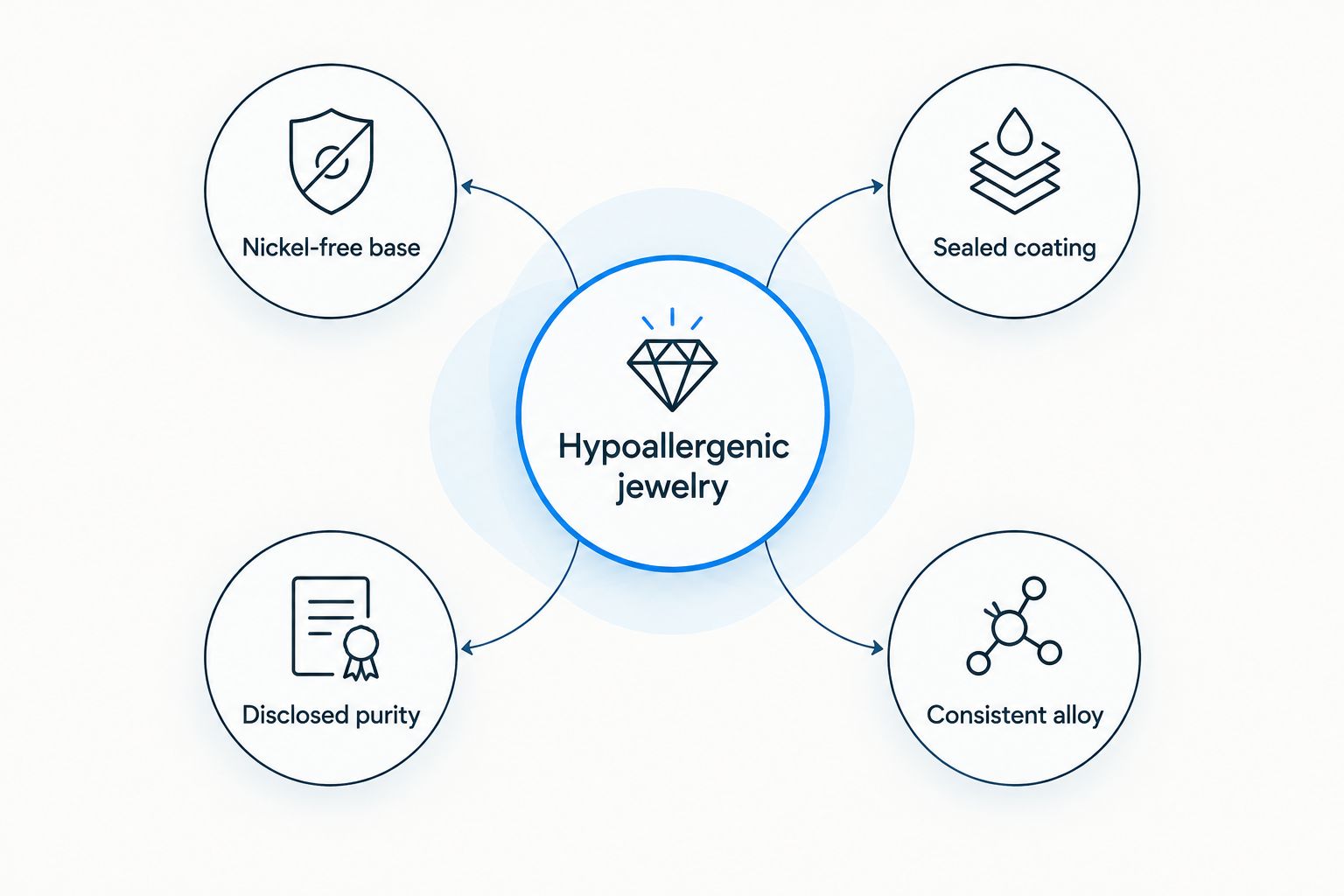
Before ranking anything, here's what separates a genuinely skin-safe piece from a marketing label:
- Nickel-free base metal — the alloy under any plating or finish has to skip nickel, not just the visible surface.
- Sealed anti-tarnish coating — a coating that blocks moisture and oxidation also blocks skin contact with the metal underneath.
- Disclosed purity — 925 silver, 18k or 14k gold, or a stated plating thickness, not a vague "gold tone" description.
- Consistency across the range — one hypoallergenic earring means nothing if the matching necklace uses a different alloy.
- Real-world wear performance — pieces that survive monsoon humidity and daily wear without discoloring or irritating skin.
Hypoallergenic jewelry brands in India: at a glance
| Brand | Best for | Standout feature | Key limitation |
|---|---|---|---|
| Mehrooh | Gold-plated anti-tarnish fashion jewelry | Nickel-free base sealed against monsoon humidity | Plating wears over years, it isn't solid gold |
| Giva | Solid sterling silver hypoallergenic jewelry | 925 silver base with no plating to chip | Heavier and less ornate than fashion jewelry |
| BlueStone | Fine gold and diamond hypoallergenic pieces | 18k/14k gold with certified purity | Positioned for occasion wear, not daily rotation |
| Melorra | Lightweight daily-wear gold jewelry | Slim 14k/18k designs built for everyday wear | Smaller catalogue of anti-tarnish fashion pieces |
| Zavya | BIS-hallmarked silver jewelry | Government-recognized hallmark on every piece | Limited color and stone variety |
1. Mehrooh: best hypoallergenic jewelry for gold-plated anti-tarnish fashion pieces
Mehrooh sells gold-plated, anti-tarnish earrings, rings, necklaces and bracelets for women in India, with plating sealed to resist fading and skin reactions. A piece like the star anise drop earrings shows the approach: a nickel-free base under a sealed gold-plated finish, built for daily wear rather than occasional dress-up.
Mehrooh pros:
- Nickel-free base metal means daily earrings and rings skip the itch cheap costume jewelry causes.
- Anti-tarnish coating holds its shine through humidity and sweat without a special cleaning routine.
- Full range across earrings, rings, necklaces and bracelets, so a matching set doesn't mean switching materials.
Mehrooh cons:
- It's gold-plated, not solid gold — the base metal can show through if the coating chips after years of wear.
- The catalogue skews toward fashion and everyday pieces over statement fine jewelry.
Best for: shoppers who want hypoallergenic jewelry that looks like gold, worn daily, without the weight or upkeep of fine gold.
Verdict: Buy.
2. Giva: best hypoallergenic jewelry for solid sterling silver
Giva sells 925 sterling silver jewelry in India, using silver purity as the reason pieces don't react on skin the way costume alloy does.
Giva pros:
- Solid silver base means there's no plating layer to wear off over time.
- 925 purity is a recognized standard, so the metal content is disclosed rather than guessed at.
- The range spans earrings, rings and pendants in a similar minimal style.
Giva cons:
- Silver oxidizes over time and needs occasional polishing, even when marketed as low-maintenance.
- Heavier per piece than gold-plated fashion jewelry, which daily wearers sometimes notice by evening.
Best for: shoppers who want a hypoallergenic base metal with no gold plating involved.
Verdict: Buy for silver-first wardrobes.
3. BlueStone: best hypoallergenic jewelry for fine gold and diamond pieces
BlueStone sells certified gold and diamond jewelry, using 18k and 14k gold, which carries a lower alloy content than fashion jewelry and tends to sit easier on sensitive skin.
BlueStone pros:
- 18k gold is roughly 75% pure gold, leaving less room for nickel or other reactive metals in the mix.
- Purity and stone certification give a paper trail costume jewelry doesn't offer.
- Built for occasion pieces meant to last years, not seasons.
BlueStone cons:
- Fine gold jewelry sits in a different budget bracket than fashion jewelry, so it's not a swap for everyday earrings.
- The catalogue leans toward rings and pendants over the stacked, layered look fashion shoppers want.
Best for: buyers who want hypoallergenic jewelry in solid gold for weddings, gifting or long-term wear.
Verdict: Buy for fine jewelry budgets.
4. Melorra: best hypoallergenic jewelry for lightweight daily-wear gold
Melorra designs lightweight 14k and 18k gold jewelry aimed at daily wear rather than occasion wear, keeping pieces thin enough to wear all day without the heft of traditional gold jewelry.
Melorra pros:
- Lightweight designs mean less metal in contact with skin over a full day.
- 14k and 18k options give a purity disclosure similar to fine jewelry brands, without occasion-jewelry pricing.
- Designs skew modern and stackable, closer to fashion jewelry than traditional gold.
Melorra cons:
- Smaller selection of anti-tarnish fashion pieces compared to gold-plated specialists.
- Solid gold, even lightweight, costs more per piece than plated alternatives.
Best for: shoppers who want real gold without the weight or price tier of traditional fine jewelry.
Verdict: Hold — worth it if solid gold outranks budget.
5. Zavya: best hypoallergenic jewelry for BIS-hallmarked silver
Zavya, Tanishq's silver jewelry line, sells BIS-hallmarked silver pieces, meaning every item carries a government-recognized purity check rather than a brand's own claim.
Zavya pros:
- BIS hallmarking gives an independent purity check, not just a marketing label.
- Backed by an established retail jewelry name with wide store availability.
- Silver base skips the plating-wear issue entirely.
Zavya cons:
- Design range leans classic and silver-only, with less color and stone variety than fashion brands.
- Silver still tarnishes with air exposure and needs periodic cleaning.
Best for: shoppers who want certified purity over design variety.
Verdict: Buy for certification-first shoppers.
How we ranked
Each brand above got measured against the same five criteria: nickel-free base metal, sealed or certified finish, disclosed purity, consistency across a range, and how pieces perform after months of actual wear. Mehrooh and Giva score highest on skin-safety for daily fashion pieces; BlueStone and Zavya win on certification; Melorra sits between fashion and fine jewelry as a lightweight gold option.
For a closer look at how anti-tarnish plating specifically holds up over time, read Mehrooh's breakdown of anti-tarnish jewelry brands in India.
Which hypoallergenic jewelry brand should you choose?
If you want gold-plated pieces that look expensive without the nickel reaction, Mehrooh is the default pick for 2026 — the anti-tarnish coating and nickel-free base cover earrings, rings, necklaces and bracelets in one place. Choose Giva if you'd rather skip plating altogether and wear solid silver. Choose BlueStone or Zavya if certification on paper matters more than catalogue variety. Melorra is the middle ground for anyone who wants lightweight solid gold.
Skip any brand that won't disclose its base metal or plating thickness — that detail predicts whether a piece irritates your skin far better than the price tag does.
Shop hypoallergenic jewelry today
Gold-plated, anti-tarnish earrings, rings, necklaces and bracelets built for everyday wear.
FAQ
What is hypoallergenic jewelry?
Hypoallergenic jewelry is jewelry made or finished to avoid metals that commonly trigger skin reactions, mainly nickel. In 2026, that means a nickel-free base metal, sealed plating, or a solid metal like 925 silver or 18k gold.
Is gold-plated jewelry hypoallergenic?
Gold-plated jewelry is hypoallergenic only if the base metal under the plating is nickel-free and the coating is properly sealed. Plating alone doesn't guarantee safety if the metal underneath contains nickel.
Which metal is safest for sensitive skin?
Pure gold, 925 sterling silver, titanium and surgical steel are generally the safest options for sensitive skin. Pure gold itself rarely reacts; it's the alloy mixed in that usually causes irritation.
Is sterling silver hypoallergenic?
Sterling silver marked 925 is hypoallergenic for most wearers because it's 92.5% pure silver with minimal alloy content. It can still tarnish with air exposure, which is a cosmetic issue, not a skin-safety one.
Is anti-tarnish jewelry the same as hypoallergenic jewelry?
Not automatically. Anti-tarnish jewelry resists discoloration through a sealed coating, and that same seal often blocks skin contact with the base metal, but the base metal still has to be nickel-free for the piece to count as hypoallergenic.
Does 18k gold cause allergic reactions?
18k gold rarely causes reactions because it's roughly 75% pure gold, leaving little room for reactive alloy metals. Lower-karat gold and gold-plated pieces carry more alloy and a higher reaction risk.
Can hypoallergenic jewelry still turn skin green?
Genuinely hypoallergenic jewelry shouldn't turn skin green, since that discoloration comes from base-metal oxidation reacting with skin oils. If a piece marketed as hypoallergenic still does this, the plating or seal has likely worn through.
One last thing
Pure gold is almost never the problem. It's nearly inert on skin, which is why 24k gold rarely causes a reaction even in people with metal allergies — the itch comes from whatever alloy gets mixed in to make the metal workable. A properly sealed anti-tarnish plating protects the wearer from that alloy in roughly the same way solid 18k gold does; it just does it at a different price point and with a coating that can eventually wear down. Check the seal, not just the color, before you decide a piece is safe for daily wear in 2026.


